



Sure, most of us have popped open a jar of homemade pickles or strawberry jam—but did your family ever can pork, beef, or poultry?
For rural families in the 1930s and early 1940s, self-sufficiency wasn’t a trendy lifestyle choice; it was a matter of sheer survival. Before home refrigeration became commonplace, learning to safely preserve meat was the only way to bridge the harsh “hunger gap” of winter.
A Snapshot of Survival (1942)
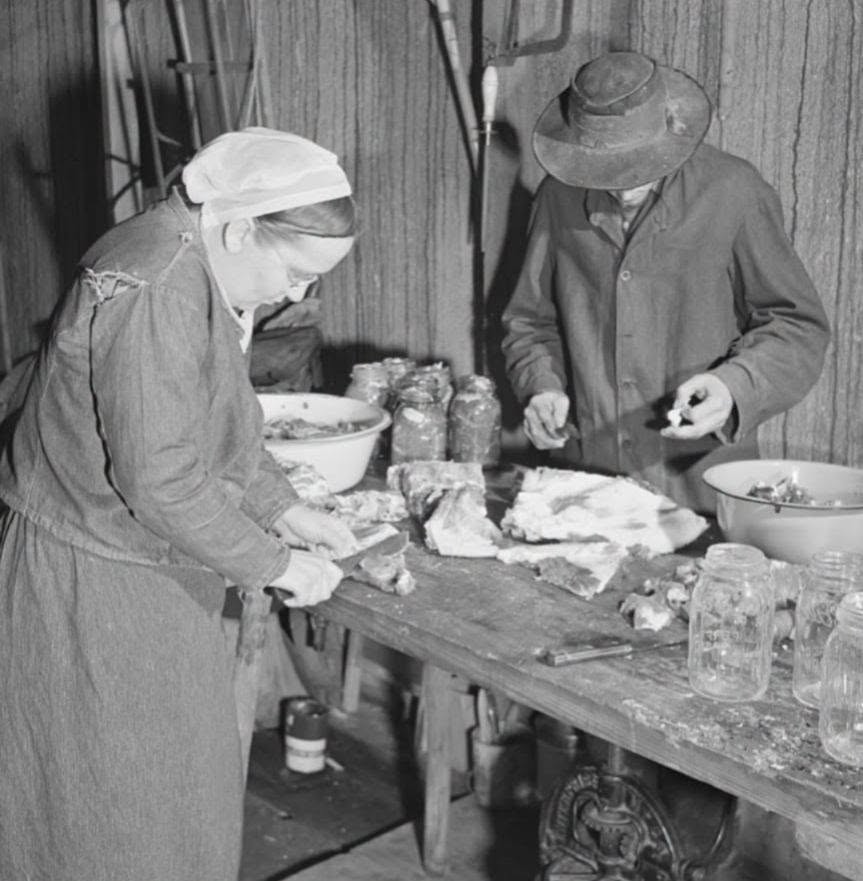
Captured by photographer John Collier for the Library of Congress, this 1942 photograph takes us inside a home near Honey Brook, Pennsylvania. In it, an Amish couple works side-by-side at a rustic wooden prep table, carefully trimming and butchering raw beef to fill their pantry shelves for the months ahead.
The Prep & Process
Preserving meat required precision, clean tools, and relentless labor:
- Trimming the Cut: Fresh beef was trimmed down to remove excess fat and gristle before being chopped into uniform chunks.
- Raw Packing: The raw meat was tightly packed into heavy glass Mason jars without adding water—the beef would release its own natural, savory juices as it heated.
- Pressure Over Boiling: Because low-acid foods like meat carry a high risk of botulism, simple water-bath boiling wouldn’t cut it. Families relied on high-temperature pressure cookers, a technology heavily promoted by the Farm Security Administration during the Great Depression and WWII eras.
Join the Conversation
From pork sausage and tenderloins to canned beef stew meat, these preserved staples kept generations nourished through tough times.
Did your parents or grandparents can meats back in the day? What were your family’s favorite pantry staples? Drop a comment below and share your stories!




Leave a Reply